
Scar Tissue Mobilization: What It Can Help With and When to Seek Assessment
Learn what scar tissue mobilization may improve, when it is safe, which options to compare, and how to find rehabilitation support in London, Ontario.
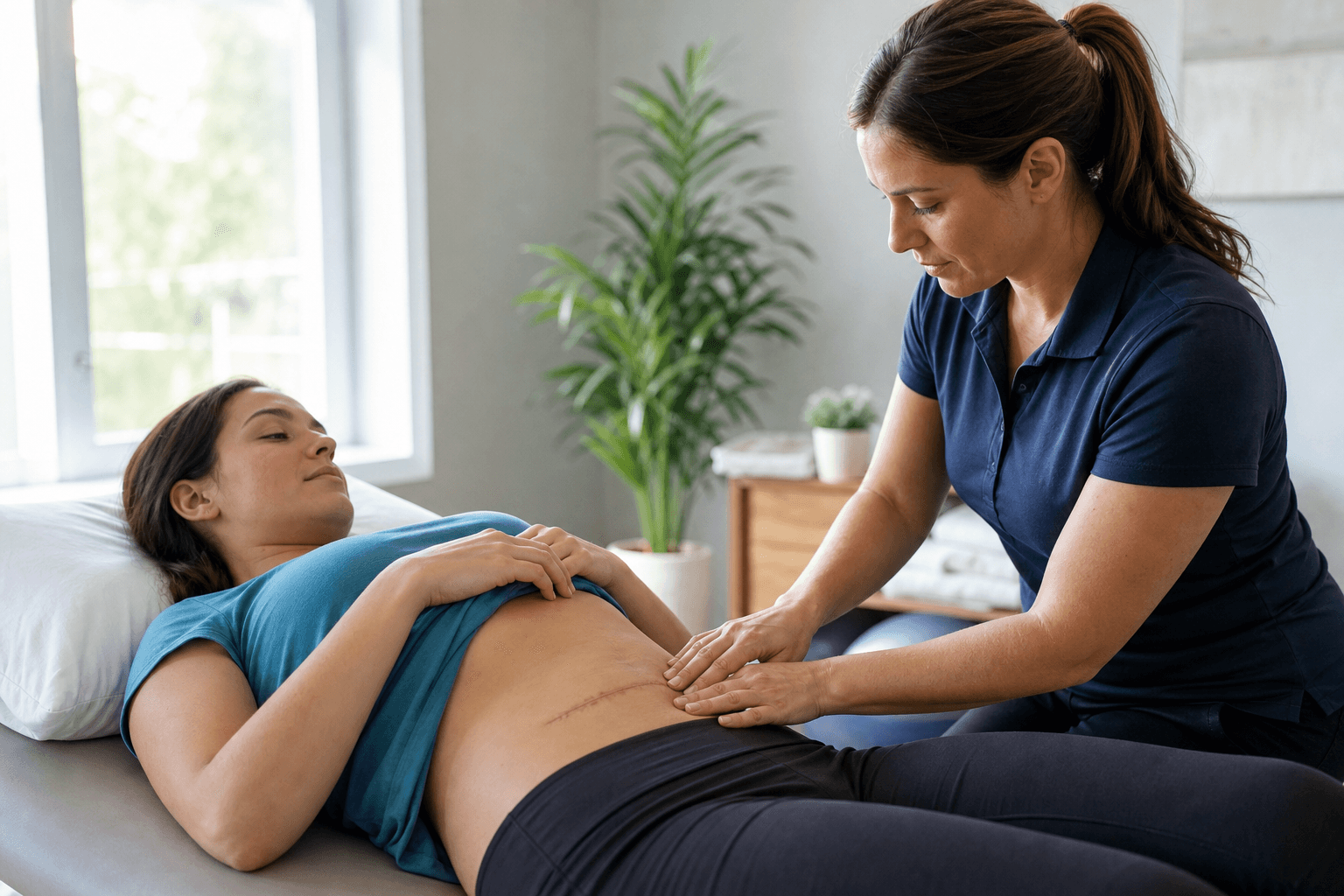
Scar tissue mobilization may help improve how a healed scar and the surrounding tissues move, feel, and function. It is not a process that literally erases, dissolves, or guarantees the removal of scar tissue. The appropriate timing and technique depend on how well the wound has healed, the type of surgery or injury involved, and whether the scar is affecting movement or daily activities.
If you notice pulling, sensitivity, restricted movement, or ongoing discomfort around a healed scar, an assessment can help determine whether scar-focused care is appropriate. In Ontario, physiotherapy includes assessment, treatment, rehabilitation, and prevention or relief of physical dysfunction, injury, or pain, as described in the Physiotherapy Act.
Quick summary
- Scar tissue mobilization aims to improve tissue mobility, comfort, sensitivity, and function rather than physically break down a scar.
- Do not massage or manipulate an open, draining, infected, or medically concerning wound.
- There is no universal date for starting treatment after surgery. Follow your surgeon’s or physician’s instructions first.
- Assessment-led physiotherapy, movement exercises, manual therapy, therapeutic massage, and other approaches may be considered depending on your needs.
- In London, Ontario, ask about the practitioner’s experience, consent process, expected discomfort, follow-up plan, and benefit coverage before booking.
What scar tissue mobilization means
After an injury or surgery, the body creates scar tissue as part of healing. A scar may feel tight, sensitive, numb, raised, or attached to the tissue beneath it. Sometimes the scar itself is not the main problem. Nearby muscles, joints, nerves, swelling, or protective movement patterns may also contribute to symptoms.
Scar tissue mobilization is a descriptive term for hands-on or movement-based strategies intended to help the scar and surrounding tissues move more comfortably. Related terms include scar tissue management, scar massage, manual therapy, and soft-tissue mobilization. Instrument-assisted soft-tissue mobilization, or IASTM, is another category of technique, but a familiar treatment name does not by itself establish that it is suitable for every scar.
It is more accurate to discuss improving mobility, sensitivity, adhesions, and function than to promise that treatment will “break up” scar tissue. A clinician should explain what the treatment is intended to change and how progress will be judged, such as improved range of motion, reduced sensitivity, easier movement, or better tolerance of an activity.
When a scar may benefit from professional assessment
Not every scar needs treatment. A flat, comfortable scar that does not restrict movement or affect your activities may require no special intervention beyond appropriate aftercare. An assessment becomes more useful when symptoms persist or interfere with recovery.
Consider asking for professional guidance if you notice:
- Pulling or tightness when stretching, reaching, walking, or changing position.
- Persistent tenderness, sensitivity, itching, or discomfort around the scar.
- A feeling that the scar is attached to deeper tissue or moves differently from the surrounding skin.
- Reduced range of motion near a joint or difficulty returning to a normal activity.
- Ongoing functional limitations after surgery, an injury, or a wound has otherwise healed.
- Concern about a scar near the abdomen, pelvis, breast, or another sensitive area where treatment requires additional privacy and clear consent.
A clinician should consider the scar in the context of your whole recovery rather than treating it in isolation. For example, restricted movement may also relate to weakness, swelling, nerve sensitivity, joint stiffness, or fear of loading the area.
Safety comes before scar mobilization
Do not begin scar massage or self-mobilization over an open, bleeding, draining, or infected wound. You should also pause and seek medical advice for increasing redness or warmth, pus, fever, unexpected swelling, severe or worsening pain, significant colour changes, new numbness, or a wound that appears to be separating.
There is no universal post-operative start date. The right timing depends on the procedure, incision, complications, skin integrity, medical history, and instructions from your surgical or medical team. If you have recently had surgery, ask when the area may be touched, what products or pressure are permitted, and which movements should be avoided.
Internal or sensitive treatment requires an especially careful consent process. You should receive a clear explanation of what may happen, have the opportunity to ask questions, and be able to decline or stop treatment at any time. A pelvic health appointment, for example, should respect privacy, explain the options, and proceed only with your consent.
Comparing scar tissue treatment options
The best option depends on the scar’s healing status, your symptoms, and the functional problem you are trying to solve. These approaches are not interchangeable, and more intense treatment is not automatically better.
| Option | What it may involve | When it may fit | Important limitation |
|---|---|---|---|
| Assessment-led physiotherapy | Review of healing, sensitivity, movement, strength, surrounding tissues, and functional goals. | Persistent restriction, pain, sensitivity, or difficulty progressing after surgery or injury. | The scar may not be the only or main source of the problem. |
| Gentle home care | Only-cleared touch, skin care, mobility exercises, and gradual return to activity. | A clinician or surgical team has confirmed that the wound is ready and explained what to do. | Self-treatment is not appropriate for an open or concerning wound. |
| Manual therapy | Carefully graded hands-on work to the scar or nearby tissues, combined with movement. | Stiffness or tissue sensitivity is limiting a specific movement or task. | Pressure should be adapted to healing status and tolerance. Discomfort is not a measure of effectiveness. |
| Therapeutic massage | Soft-tissue work, assisted stretching, and other techniques directed at comfort and mobility. | Muscle tension or surrounding soft-tissue restriction is contributing to symptoms. | Massage should not replace medical review of a wound or unexplained symptoms. |
| Exercise-based rehabilitation | Progressive mobility, strengthening, breathing, posture, or task-specific exercises. | The goal is to restore movement, strength, confidence, and everyday function. | Exercises must match the operation, injury, healing stage, and current capacity. |
| Dry needling or acupuncture | Needling may be used for surrounding muscles or pain as part of a broader plan. | A trained practitioner determines that it is clinically appropriate for the overall problem. | It is not a universal scar treatment and may not be suitable for every person or area. |
For broader soft-tissue work around a scar, therapeutic massage may help address comfort and mobility alongside scar tissue mobilization. Depending on the assessment, care may also include assisted stretching or other movement strategies.
When scar-related tightness involves surrounding muscles, dry needling may be considered as part of a broader rehabilitation plan. It should be selected for a specific clinical reason, not because it is assumed to work for every scar.
What a first assessment may involve
An assessment usually begins with your health history and a discussion of the surgery, injury, wound, symptoms, and recovery instructions you have received. Tell the practitioner about medications, complications, altered sensation, swelling, allergies, and any restrictions provided by your healthcare team.
The practitioner may observe the scar and surrounding skin, ask how symptoms change with movement or pressure, and assess nearby joints, muscles, strength, sensitivity, and range of motion. They should also ask what you want to return to, whether that is walking comfortably, lifting, exercising, working, caring for a child, or participating in a sport.
Your plan may combine education, gradual movement, hands-on techniques, strengthening, desensitization, and home exercises. The scar is treated as one part of your rehabilitation, with progress measured against meaningful goals rather than by how much pressure a session can tolerate.
Questions to ask before booking scar-related care
- Do you assess scars after surgery or injury, and will you review my healing instructions?
- What information should I bring from my surgeon, physician, or hospital?
- How will you decide whether hands-on treatment is appropriate?
- What should treatment feel like, and what level of discomfort is a reason to stop?
- What alternatives are available if I do not want hands-on treatment?
- How will we measure progress, such as movement, sensitivity, function, or activity tolerance?
- Will the plan include exercises or other steps I can safely do between appointments?
- Which practitioner will provide the care, and what are their qualifications?
- Is the appointment eligible for my extended health benefits, and can the clinic bill my insurer directly?
Finding rehabilitation support in London, Ontario
If you are looking for physiotherapy in London, Ontario, choose a clinic that can assess the whole recovery problem rather than offering a technique without context. Planet Health Care is a multidisciplinary rehabilitation clinic in North London, located at Sherwood Forest Mall. Its verified services include physiotherapy assessment and hands-on rehabilitation for injury and post-surgical recovery, as well as registered massage therapy and acupuncture or dry needling within broader rehabilitation planning.
Planet Health Care’s model brings several rehabilitation disciplines together under one roof, which may be useful when a scar concern overlaps with weakness, joint restriction, muscle tension, pain, or another functional issue. The clinic also states that direct billing is available for many eligible services, subject to each insurer’s rules, limits, and approval requirements. Scar tissue mobilization should be confirmed with the clinic as an appropriate part of your individual plan rather than assumed to be a separately advertised service.
If the concern involves a tattoo or recent skin injury
A tattoo or other recent skin injury should be treated as healing skin, not as a scar that needs immediate manipulation. Follow the aftercare instructions provided by the qualified professional who performed the procedure, keep the area protected as advised, and do not apply pressure or products that have not been recommended.
For general information about protecting a healing tattoo and recognizing when to ask for help, see this tattoo healing and aftercare guide. If the skin becomes increasingly painful, hot, swollen, or draining, seek appropriate medical advice rather than attempting scar massage.
Frequently asked questions
How soon after surgery can scar tissue mobilization begin?
There is no safe universal timeline. Start only when your surgeon or treating clinician confirms that the incision or wound is ready and explains what type of touch or movement is appropriate. The procedure, healing progress, complications, and your general health all matter.
Should scar tissue mobilization hurt?
Treatment may create mild, temporary sensations, but severe, sharp, escalating, or lingering pain is not something to push through. Tell the practitioner immediately if the pressure or technique feels wrong. A safer plan may involve less pressure, a different area, movement, education, or postponing treatment.
Does every scar need massage or mobilization?
No. A comfortable scar that does not restrict movement or affect function may not need targeted treatment. An assessment is most useful when you have ongoing sensitivity, pulling, restricted movement, or difficulty returning to normal activities.
Can scar tissue mobilization help with restricted movement?
It may help when scar-related stiffness or sensitivity contributes to the restriction, but the scar may not be the only factor. A complete rehabilitation plan may also address joint mobility, muscle strength, swelling, nerve sensitivity, movement habits, and confidence with activity.
Will extended health insurance cover scar-related physiotherapy or massage in Ontario?
Coverage depends on your specific plan, eligible provider, annual limits, referral requirements, and how the service is billed. Ask the clinic and your insurer before treatment. Direct billing, where available, does not guarantee that your plan will reimburse the full amount.
Conclusion: choose assessment before intensity
Scar tissue mobilization is best understood as part of scar and rehabilitation management. Its realistic purpose is to improve comfort, tissue movement, sensitivity, and function when those issues are affecting recovery, not to promise that a scar will be erased or physically dissolved.
If a scar is healed but still feels tight, sensitive, attached, or limiting, start with an assessment rather than choosing the most aggressive technique. Confirm healing status, ask how consent and discomfort will be handled, and choose a plan that connects hands-on care with safe movement and functional goals.
For physiotherapy assessment and broader rehabilitation options in North London, Ontario, contact Planet Health Care to discuss whether its services are appropriate for your scar-related concerns.