
What Is Myofascial Release Massage in London, Ontario?
Learn what myofascial release means, how it differs from massage and physiotherapy, and how to choose the right care in London, Ontario for your needs.
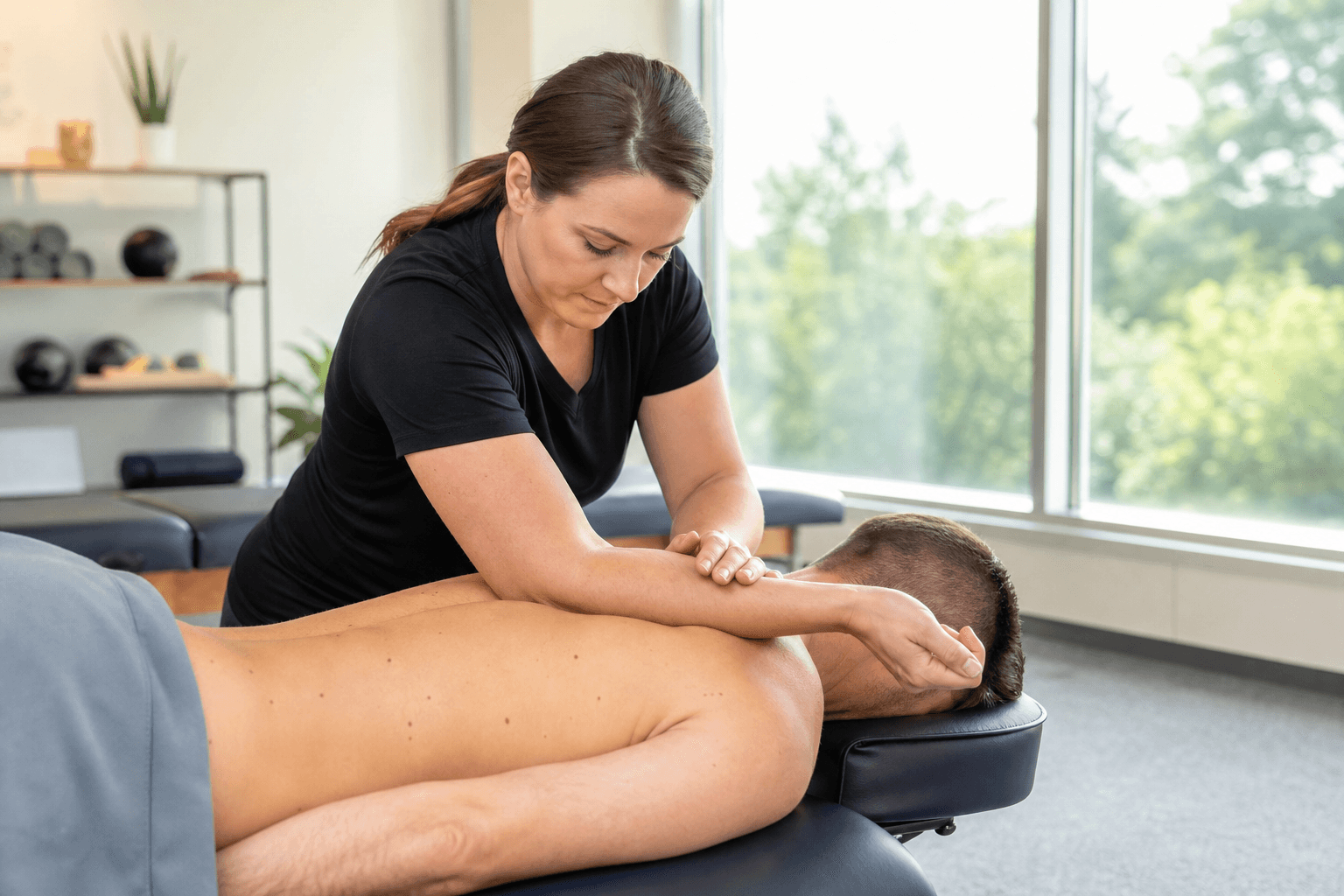
Myofascial release generally refers to hands-on soft-tissue work focused on areas of tension, discomfort, or restricted movement. It is not one standardized treatment protocol, so techniques, pressure, and treatment goals can vary between practitioners.
If you are searching for myofascial release in London, Ontario, the key question is whether you primarily want massage-based care for tension and mobility, or a broader assessment that considers injury, movement, function, and rehabilitation.
What does myofascial release mean?
“Myofascial” combines two ideas: muscle and fascia. In everyday clinical conversation, myofascial release may describe hands-on work directed at soft tissues that feel tense, sensitive, or limited in movement. A practitioner may use sustained pressure, gliding work, stretching, or other manual techniques selected for the person and treatment area.
The phrase can mean different things in different settings. It should not automatically be interpreted as a promise to permanently “release” fascia, break up adhesions, cure pain, or produce a specific result. A responsible provider should explain the intended approach and adjust it according to your response.
Planet Health Care’s relevant massage options include deep therapeutic work, relaxation massage, assisted stretching, and specialized manual lymphatic drainage. Its supplied service information does not present myofascial release as a separate named service, so ask which approach best matches your concern when booking.
When might someone consider this approach?
People often explore myofascial release massage when they notice ongoing muscle tension, soft-tissue discomfort, or a feeling that movement is restricted. Others consider hands-on care during injury recovery or alongside a plan to restore mobility.
These are reasons to discuss treatment, not diagnoses. Similar symptoms can have different causes, and massage is not the most suitable first step for every problem. If an issue is persistent, worsening, related to an injury, or affecting walking, lifting, work, sleep, or other activities, an assessment may help clarify the appropriate care.
Begin with a specific goal rather than a technique name. For example, tell the clinic whether you want help with neck tension, shoulder movement, or returning to an activity after an injury.
Myofascial release, massage, or physiotherapy: how do they differ?
These options can overlap, but they are not interchangeable. The right choice depends on your goal, the complexity of the problem, and whether you need movement assessment or rehabilitation planning.
| Option | Likely purpose | Provider may focus on | Useful next step |
|---|---|---|---|
| Relaxation massage | Relaxation, stress management, and comfortable hands-on care | Comfort, general muscle relaxation, and preferred pressure | Explain areas of tension and pressure preferences |
| Deep therapeutic massage | Focused care for chronic tension, soft-tissue discomfort, or mobility concerns | Targeted manual work, pressure tolerance, and your functional goal | Ask whether assisted stretching may complement treatment |
| Myofascial-focused work | Technique-led care for areas that feel restricted or tense | Soft-tissue contact, movement response, and pressure | Ask what the practitioner means by myofascial release |
| Physiotherapy assessment | Understanding injury, pain, restricted movement, or reduced function | History, movement testing, manual therapy, exercise, and education | Consider this when the cause is unclear or function is affected |
Massage therapists are regulated health professionals in Ontario. The province describes massage therapy as treating and preventing physical dysfunction and pain involving the body’s soft tissues and joints. This does not mean every massage appointment is a full assessment for every condition, so describe your symptoms and ask what the session is designed to address.
Why assessment matters before choosing a technique
A technique’s name does not explain why movement is limited or why discomfort continues. An assessment can connect symptoms to your history, movement patterns, daily activities, and recovery goals.
Planet Health Care’s physiotherapy in London includes a history, movement testing, and a plain-language explanation of findings. Treatment may combine manual therapy with a customized home exercise program. This can be useful when you need to understand the problem and work on changes beyond the treatment table.
Massage-based care can also be individualized. A registered massage therapist may adjust pressure, choose a focused or gentler approach, and incorporate assisted stretching depending on your goals and comfort.
Which starting point fits your concern?
- Consider registered massage therapy when your main goal is hands-on care for muscle tension, soft-tissue discomfort, or general mobility.
- Consider physiotherapy first when symptoms followed an injury or surgery, have persisted, affect function, or require movement retraining and home exercise.
- Ask the clinic for direction when you are unsure whether the problem is tension, an injury-related limitation, or something requiring assessment.
Physiotherapy can include manual therapy, so choosing it does not mean giving up hands-on care. Massage therapy can also include stretching and focused therapeutic work without needing to be described as myofascial release.
Questions to ask before booking
- What does “myofascial release” mean at this clinic?
- Will you ask about my symptoms, health history, activities, and goals?
- Is the appointment massage-based, or does it include movement assessment?
- How will pressure or technique be adjusted if treatment is uncomfortable?
- What should I expect during the session?
- Could stretching, exercise, or rehabilitation complement hands-on work?
- When would physiotherapy, medical follow-up, or another type of care be more appropriate?
- Which services are eligible for my benefits, and can the clinic bill my insurer directly?
You should be able to describe your comfort level, ask why a technique is being used, and receive clear guidance about what to do next.
Finding myofascial-focused care in London, Ontario
Planet Health Care is located at Unit 15, 1225 Wonderland Road North, inside Sherwood Forest Mall in North London. Its registered massage therapy service includes deep therapeutic work and assisted stretching, while its physiotherapy service includes movement testing, manual therapy, and a customized home exercise program. This gives patients a choice between massage-focused care and assessment-led rehabilitation without implying that myofascial release is a separate advertised service.
The clinic lists direct billing to many major insurers, online booking, free parking at the mall, and same-day appointments when available. When comparing providers, look for clear explanations of techniques, credentials, assessment processes, and communication expectations. You can also compare massage therapy approaches to help shape your questions.
When uncertain, tell the front desk what you are experiencing rather than insisting on a particular technique. Explain whether your main concern is chronic tension, restricted movement, injury recovery, or a change in function.
Frequently asked questions
Is myofascial release the same as a regular massage?
No. Myofascial release usually describes a focused hands-on approach, while regular massage may refer to relaxation, therapeutic, or other forms of massage. The terms can overlap.
Should I book massage therapy or physiotherapy for restricted movement?
If restriction is mainly associated with muscle tension and you want hands-on care, massage therapy may be a reasonable starting point. If it followed an injury, affects function, persists, or has an unclear cause, physiotherapy may provide more useful direction.
Can pressure be adjusted if treatment is uncomfortable?
Yes, ask the provider to adjust pressure or technique whenever treatment is uncomfortable. More intensity is not automatically better.
What should I tell the clinic if I am unsure which service to book?
Describe where the problem is, how long it has been present, whether it followed an injury, which activities are affected, and whether your priority is relaxation, tension relief, or rehabilitation.
Choose the care plan that matches your goal
Myofascial release is best understood as a possible hands-on approach, not a fixed protocol or guaranteed outcome. It may suit tension-focused massage care, while physiotherapy may be more appropriate when you need movement testing, an explanation of the problem, and structured rehabilitation.
For local care, Planet Health Care offers registered massage therapy with deep therapeutic work and assisted stretching, as well as physiotherapy with assessment, manual therapy, and customized exercise in London, Ontario.