
Medical compression stockings in London, Ontario: fit and fittings
Compare medical compression stockings in London, Ontario: knee vs thigh, compression grades, professional Sigvaris fittings, insurance and a checklist.
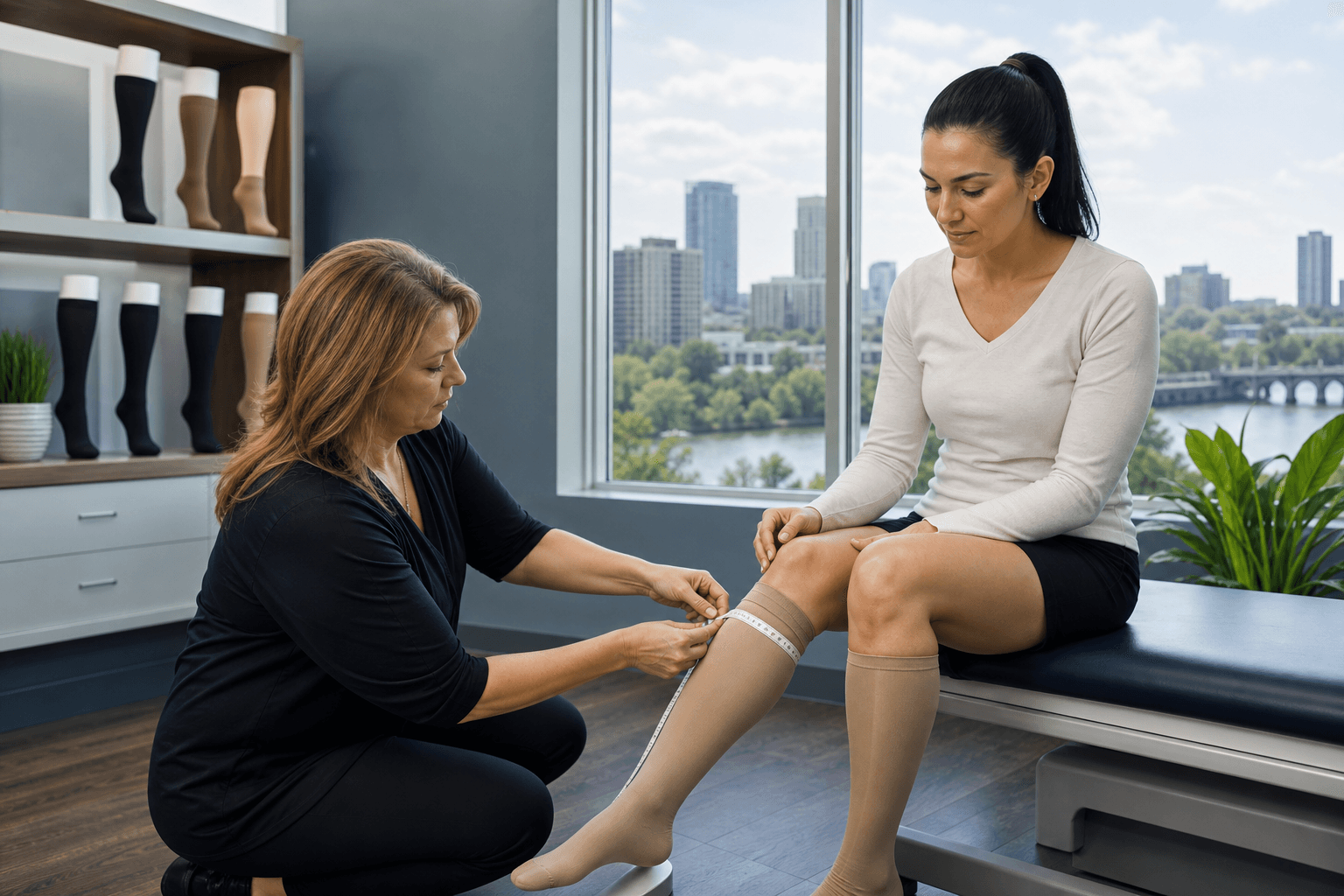
Medical compression stockings in London, Ontario: fit and fittings
If you are searching for medical compression stockings london ontario, this article compares product types, compression grades, and what to expect from a professional Sigvaris measurement and fitting. It explains the Canadian regulatory context for compression hosiery, and it gives a practical checklist you can use before you book an appointment.
Quick decision checklist: who should consider a professional assessment
Compression stockings are commonly used to manage leg swelling, symptoms of chronic venous insufficiency, to help prevent recurrence of venous leg ulcers, and to support recovery after some vascular procedures. They are not a universal remedy, so a brief assessment will help decide whether you need medical-grade stockings or an over-the-counter support sock. A Health Technology Assessment notes that in Canada compression stockings are class 1 devices and do not require a medical device licence, which affects how they are regulated and supplied (Health Technology Assessment).
- Consider a fitting if you have persistent ankle or leg swelling, visible varicose veins, a history of venous ulcers, or a clinician has advised compression after a procedure.
- Book an assessment if you have diabetes, peripheral arterial disease, or unclear leg symptoms so a clinician can confirm stockings are safe for you.
- If you need precise sizing, durable materials or professional warranty support, choose a clinic that offers certified fittings rather than buying generic over-the-counter socks.
How product types differ: knee, thigh, graduated and open-toe options
Style and construction affect comfort, effectiveness and ease of use. Below are the main product categories and practical tradeoffs to discuss at your fitting.
Knee-length versus thigh-length
Knee-length stockings cover from the foot to just below the knee and are the most common choice for everyday swelling, mild venous insufficiency and travel. Thigh-length stockings extend higher and are recommended when varicose veins or swelling involve the thigh or when ulceration is above the calf. Thigh stockings are more likely to slip or roll, so ask your fitter about silicone bands, suspenders or garter options if you have reduced mobility.
Graduated compression versus uniform compression
Medical stockings are usually graduated, with the strongest compression at the ankle and gradually less toward the thigh. This gradient encourages venous return toward the heart. Uniform compression is less common for medical therapy and appears more often in general support products. For venous conditions, ask your fitter for graduated hosiery unless a clinician advises otherwise.
Open-toe or closed-toe
Open-toe designs improve breathability and make it easier to monitor foot swelling and sensation. Closed-toe stockings give a smoother look and slightly more foot support. If you use custom orthotics or specific shoes, discuss toe design so the stocking works with your footwear.
Materials, seams and breathability
Quality medical stockings use blends designed to balance elasticity, breathability and durability. Seamed stockings can fit differently from seamless models. If you overheat easily or work in warm conditions, ask about lighter knit weights and more breathable fabrics at the fitting.
How compression grades work and common clinical uses
Compression is measured in millimetres of mercury, mmHg. Common ranges and typical uses are:
- Light support (8 to 15 mmHg): general fatigue and minor swelling, often sold as nonmedical travel socks.
- Medium support (15 to 20 mmHg): travel socks and mild prevention of leg fatigue for people on long flights or who stand a lot.
- Medical prevention and therapy (20 to 30 mmHg): typical first-line grade for varicose veins, moderate venous insufficiency and prevention of ulcer recurrence under clinician guidance.
- Stronger therapeutic grades (30 to 40 mmHg and higher): used for more severe chronic venous insufficiency or significant oedema, and recommended under prescriber direction.
Because compression grade affects circulation, a clinician should advise on the correct mmHg for your condition. The Health Technology Assessment linked above summarises evidence used by clinicians and suppliers when recommending grade for venous leg ulcer prevention (Health Technology Assessment).
What a professional Sigvaris measurement and fitting looks like at Planet Health Care
Planet Health Care offers professional measurement and fitting for Sigvaris medical compression stockings on site. A professional fitter reduces the risk of poor seal, slipping, bunching and pressure points. Expect the following steps when you book a fitting at the clinic.
What to wear and bring
- Wear loose clothing so a clinician can access your lower limbs for accurate measurement.
- Bring any prescriptions or clinic notes, previous stocking brands and a list of your medications, especially if you have circulatory or cardiac conditions.
- If you use orthotics, bring the shoes you will wear with the stockings.
Measurements recorded
The fitter will measure ankle circumference, calf circumference and sometimes thigh circumference and limb length at specific points while you are standing and seated. These measurements determine the correct Sigvaris size and whether a custom or off-the-shelf graded option fits best.
Trial fitting, donning practice and ordering
The fitter will usually provide a trial garment to check fit, pressure comfort and ease of putting the stocking on. They will demonstrate donning and doffing techniques and may recommend donning aids. If a custom size or special fabric is required, the fitter will order the correct Sigvaris item and advise on expected delivery and follow-up.
Brand note: Sigvaris on-site
Sigvaris is a well known medical-grade compression brand offered at Planet Health Care. Professional fitters at the clinic can explain material differences and recommend the right Sigvaris range for your condition. See the clinic products page for available items.
Visit the clinic products and services pages for booking and product details: compression products and fittings and assessment services. The clinic offers same-day appointments when available and direct billing to many extended health insurers, and free parking at the mall entrance.
Practical tradeoffs and common objections: comfort, heat, donning and insurance
People commonly worry that stockings will be too hot, hard to put on, or not covered by insurance. Below are realistic tradeoffs and practical mitigations to discuss with your fitter.
- Comfort and heat: choose lighter knit weights and breathable fabrics if you work in warm environments. Proper sizing reduces tight hotspots and rubbing.
- Donning difficulty: mechanical donning aids, rubber gloves for grip and practising techniques with your fitter will make stockings easier to apply. Open-toe styles can simplify foot positioning.
- Insurance and direct billing: coverage varies by insurer and plan. Bring your extended health card and any prescriber notes. Planet Health Care offers direct billing to many major extended health insurers so you can confirm coverage at booking.
- Durability and replacement: higher grade hosiery tends to cost more but usually lasts longer. Ask the fitter about expected wear life, warranty and replacement cadence based on your activity and laundering habits.
Local logistics: where to get fitted in North London and what to expect
Planet Health Care is a multidisciplinary clinic located in Sherwood Forest Mall, Unit 15, North London. The clinic combines physiotherapy, pelvic floor physiotherapy, chiropractic, registered massage therapy, psychology, shockwave therapy and acupuncture, with on-site fittings for medical compression stockings and custom orthotics. Patients can book online and benefit from free parking near the mall entrance. The clinic serves neighbourhoods across North London including Sherwood Forest, Masonville, Hyde Park, Whitehills, Oakridge, Fox Hollow and the Western University area.
For booking and product information, see Planet Health Care, the products and fittings page, and the services page. Same-day appointments are available when the schedule permits and the clinic can direct bill many insurers.
Decision checklist and 10 questions to ask at your fitting
Bring this checklist to the appointment to ensure you leave with the right fit, instructions and expectations.
- Wear loose clothing and bring your regular shoes and any orthotics.
- Bring previous medical notes, prescriptions and your extended health card.
- Expect measurements at the ankle, calf and thigh and a standing check.
- Practice donning and ask for a demonstration of donning aids.
- What compression grade do you recommend for my condition and why?
- Is a knee or thigh stocking better for my distribution of symptoms?
- Do you offer trial fittings or samples I can try before purchase?
- What is the expected delivery time if a custom size is required?
- How long should I expect these stockings to last with daily wear?
- Do you provide instructions for laundering and drying?
- Are donning aids included or available for purchase?
- Does my insurance likely cover this and can you direct bill?
- What follow-up schedule do you recommend to reassess fit or compression?
- What warranty or replacement policy applies if the product fails?
Frequently asked questions
How is a professional compression stocking fitting done and how long does it take?
A fitting typically begins with a short clinical review, followed by circumference and length measurements while you are standing and sitting. The fitter will try a sample garment for comfort and fit, show donning techniques and recommend a grade. Allow 30 to 45 minutes for the full appointment including discussion and practice.
Will my extended health insurer cover medical compression stockings and can Planet Health Care direct bill?
Coverage depends on your plan and whether the item is listed as a medical benefit. Planet Health Care offers direct billing to many major extended health insurers, so bring your insurer details and prescription or referral if your plan requires one. The clinic staff can advise on likely coverage at the appointment.
How long do medical compression stockings typically last before I need replacements?
Durability varies with fabric, frequency of wear and laundering. Higher grade and thicker knit products generally last longer. Your fitter will provide an expectation for wear life and advise on signs that a replacement is needed, such as material sagging or loss of compression.
What if the stockings feel too tight or cause discomfort after the fitting?
If you experience numbness, severe pain or colour changes in the toes, remove the stockings and contact the fitter or your clinician immediately. Mild pressure or short-term discomfort can sometimes be corrected by rechecking measurements, trying a different size or changing the toe style. Never ignore severe symptoms.
Are there safe ways to put stockings on if I have limited hand strength or mobility?
Yes. Donning aids, long handled tools, rubber grip gloves and caregiver assisted techniques make stockings easier to apply. Ask your fitter to demonstrate options that match your level of hand strength and mobility.
For evidence on compression and venous leg ulcer prevention, see the Health Technology Assessment cited above (Health Technology Assessment).
Book a professional measurement and fitting with Planet Health Care to find the right medical compression stockings for your needs and to confirm insurance and follow-up options.