
How do I prepare for custom orthotics in London, Ontario?
A step-by-step checklist for custom orthotics in London, Ontario: what to bring, choosing a qualified fitter, shoe compatibility, fabrication and follow-up.
How do I prepare for custom orthotics in London, Ontario?
If you are searching for custom orthotics in London, Ontario, arriving prepared saves time and helps your fitter make devices that actually work for your feet and shoes. This article gives a short checklist, an ordered set of steps to follow before your appointment, what to bring, how to judge a fitter, what to expect during casting or scanning, and the follow-up and modification plan you should confirm before paying.
Quick checklist: what to do before your fitting
- Book a one-on-one assessment with a certified fitter or clinician and check whether the clinic offers on-site measurement and fitting.
- Bring the shoes you wear most often, including everyday, work and athletic shoes, and any current orthoses.
- Wear shorts or loose pants so the clinician can assess leg length and ankle motion.
- Prepare a short history: symptoms, previous foot or ankle injuries, surgeries, and what activities trigger pain.
- Confirm appointment logistics: clinic location, free parking, direct billing options, and follow-up policy.
Planet Health Care lists on-site professional measurement and fitting for custom orthotics, direct billing to many extended health insurers, online booking, same-day appointments when available, and free parking at Sherwood Forest Mall, which can simplify logistics for London patients. See Planet Health Care for details at Planet Health Care.
Step 1: Understand what a custom orthotic is
A custom foot orthotic is a device casted or scanned and then shaped to fit the contours of your individual foot. A foot care professional chooses materials and design to meet your foot shape and clinical needs. This differs from over-the-counter insoles, which are mass-produced and not shaped to a specific foot. For a clear definition from local foot care experts, see the Pedorthics London FAQ at Pedorthics London.
Step 2: Choose a qualified fitter in London, ON
Who fits custom orthotics? Common providers include pedorthists, certified orthotic fitters, chiropodists, physiotherapists with orthotics training, and clinicians working in multidisciplinary clinics. When comparing providers, look for these decision factors:
- Specific training or credentials in orthotics or pedorthics.
- Ability to modify devices after delivery, and a clear adjustment and warranty policy.
- Positive local reviews and a multidisciplinary team when your problem involves hips, knees or spine.
- Clear assessment-first approach with a gait and footwear review before fabrication.
- Avoid one-off vendors or trade-show sellers, who may not provide true custom fabrication or post-delivery adjustments. Consumer guidance warns that trade-show orthotics are often not truly custom and can be hard to return or modify; see the consumer advisory at OTIP.
Planet Health Care offers allied disciplines and shared notes in a single clinic, which helps coordinate care if your pain involves more than your feet. Review the clinic services and booking options at Planet Health Care services.
Step 3: What to bring to your appointment
Bring these items so the clinician can make an accurate assessment and fit your orthotic to the shoes you actually wear:
- The shoes you wear most days, and a set you use for work or sports. The fitter will check fit and compatibility.
- Any current orthoses, insoles or braces so the clinician can compare support and wear patterns.
- Your completed history or symptom notes, including recent imaging or surgical reports if you have them.
- Loose clothing or shorts to allow examination of ankle, knee and hip movement.
- Your insurance card and payment method, and any referral if required by your insurer.
Practical shoe advice from orthotic providers: ensure the shoes you plan to use with the orthotic have a removable factory insole so the custom device can sit flat and work as intended. Many providers ask you to bring your most commonly worn shoes to the first appointment for this reason. See practical footwear guidance at Custom Orthotic FAQ.
Step 4: How to check shoe compatibility
Not all shoes accept custom orthotics comfortably. Before your appointment, check the shoes you plan to use:
- Confirm the factory insole is removable. If not, an orthotic may create tightness and poor function.
- Shoes with a firm heel cup and enough depth usually work best for full-length orthotics.
- Lightweight runners and many work shoes accept orthotics, but form-fitting fashion shoes and narrow dress shoes often do not.
- If you need orthotics for athletic activities, bring the sport shoes you actually use, because performance needs differ by sport.
If you are unsure which shoes will work, your fitter should test the orthotic in your shoes during the first fitting. For basic shoe and insole tips, consult the guidance at Custom Orthotic FAQ.
Step 5: What happens during assessment, casting and fabrication
Expect a structured appointment rather than a simple insole handoff. Typical steps are:
- History and physical exam, noting symptom triggers, previous treatment, and relevant spine or hip findings.
- Gait and footwear review, with pressure or wear-pattern observations if shoes or previous orthoses are provided.
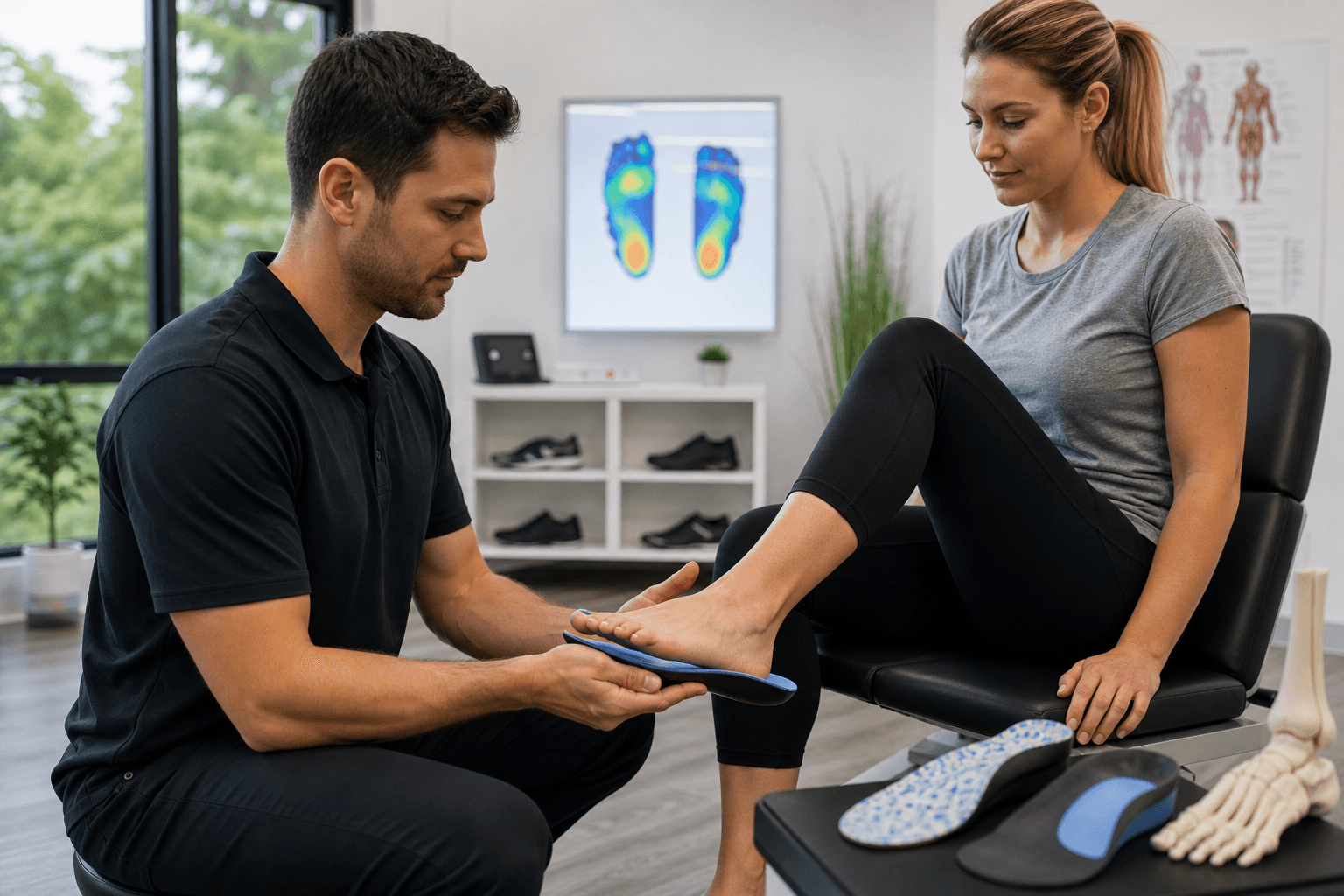
- Measurement and foot capture, either by plaster casting, foam-box casting, or a 3D scanner, depending on the clinic and tools.
- Prescription choices: materials, shell stiffness, posting and topcover are selected to match your goals and footwear.
- Lab fabrication, which is generally completed within a timeframe the fitter will specify, often a few weeks depending on lab schedules.
- Initial fitting and break-in plan, which includes staged wear recommendations and exercises as needed.
Local pedorthic resources explain that materials and design are chosen by a professional to meet your foot and condition rather than relying on a prefabricated product. For background on how a custom orthotic is tailored, see Pedorthics London FAQ.
Step 6: Follow-up, adjustments, returns and insurance basics
Before you pay, confirm the fitter's follow-up plan and modification policy. Useful questions include how many post-delivery adjustments are included, the process for remaking or refunding a device if it is not fit for purpose, and warranty terms. Consumer advice warns that vendors who cannot modify devices create future problems, so prefer providers who do in-clinic adjustments or who manage returns through a reputable lab. See the consumer advisory at OTIP.
Ask about insurance coverage and direct billing. Planet Health Care states it offers direct billing to many major extended health insurers, which can reduce out-of-pocket hassle. Confirm coverage limits with your insurer and whether the clinic will bill directly by checking the clinic site and services at Planet Health Care.
Step 7: Final decision checklist and 10 questions to ask at your appointment
Use this short rubric to decide whether to proceed, or to seek a second opinion:
- Proceed if the fitter performs a hands-on assessment, captures your foot shape accurately, and offers clear follow-up and modification policies.
- Pause and get a second opinion if the provider sells a pre-made device without assessment, cannot adjust the orthotic, or if the return policy is unclear.
Bring these 10 questions to your appointment:
- What credential or training do you have for fitting custom orthotics?
- Will you perform a gait and footwear assessment today?
- How will you capture my foot shape, plaster cast or 3D scan?
- Which materials and shell stiffness do you recommend and why?
- How long will fabrication take and who makes the orthotic?
- What is the break-in schedule and typical wear plan?
- How many adjustment visits are included and what is the fee for extra modifications?
- What is your warranty and return policy if I cannot tolerate the device?
- Do you offer direct billing to my insurer and what documentation do you provide?
- Will you coordinate care with my physiotherapist, chiropractor or other clinicians if needed?
Step 8: What to expect in the first 6 weeks after delivery
Expect a graded break-in. Many fitters recommend short initial wear periods, increasing daily wear over two to four weeks, while monitoring pain and skin tolerance. If pain increases or new problems arise, return promptly for adjustment rather than trying to force full-time wear. Confirm your follow-up timeline at delivery with your fitter. If you received treatment at a multidisciplinary clinic, coordinated notes can help therapists and clinicians align exercise and footwear advice. Planet Health Care highlights coordinated care across disciplines and shared treatment notes on site at Planet Health Care.
Frequently asked questions
What is a custom orthotic and how is it different from an over-the-counter insole?
A custom orthotic is individually casted or scanned and fabricated to the contours of your foot, with materials and design chosen by a clinician to address your condition. Over-the-counter insoles are mass-produced and cannot be tailored to a specific foot shape. For a local explanation, see the Pedorthics London FAQ at Pedorthics London.
What should I bring to my custom orthotics appointment in London, Ontario?
Bring the shoes you wear most, any current orthoses, a short symptom history, loose clothing for examination, and your insurance information. Make sure shoes have removable factory insoles so the custom device can sit flat. Practical shoe guidance is available at Custom Orthotic FAQ.
Who fits custom orthotics and how do I check their qualifications?
Pedorthists, certified orthotic fitters, chiropodists, and clinicians with orthotics training commonly fit devices. Ask about formal training, experience, modification capability, and whether they work with a lab. Prefer providers who perform assessments and adjustments rather than only selling pre-made insoles.
Can a custom orthotic be adjusted after I receive it and what is the usual follow-up plan?
Yes, adjustments are a normal and important part of the process. Confirm how many follow-up visits are included, the fitter's modification policy, and the warranty. Consumer guidance cautions against sellers who cannot modify devices, because returns can be difficult. See the advice at OTIP.
Will my extended health insurance cover custom orthotics and does Planet Health Care offer direct billing?
Coverage varies by insurer and plan. Planet Health Care indicates it provides direct billing to many major extended health insurers, which can simplify claims. Always confirm your specific plan limits before booking. Check clinic services and booking information at Planet Health Care.
Ready to book a professional fitting or ask about direct billing and same-day availability? Visit Planet Health Care to view services and book online: Planet Health Care?