
What dry needling benefits can North London patients expect?
Seven evidence-backed dry needling benefits for North London patients, plus risks, what to expect, and how Planet Health Care integrates care.
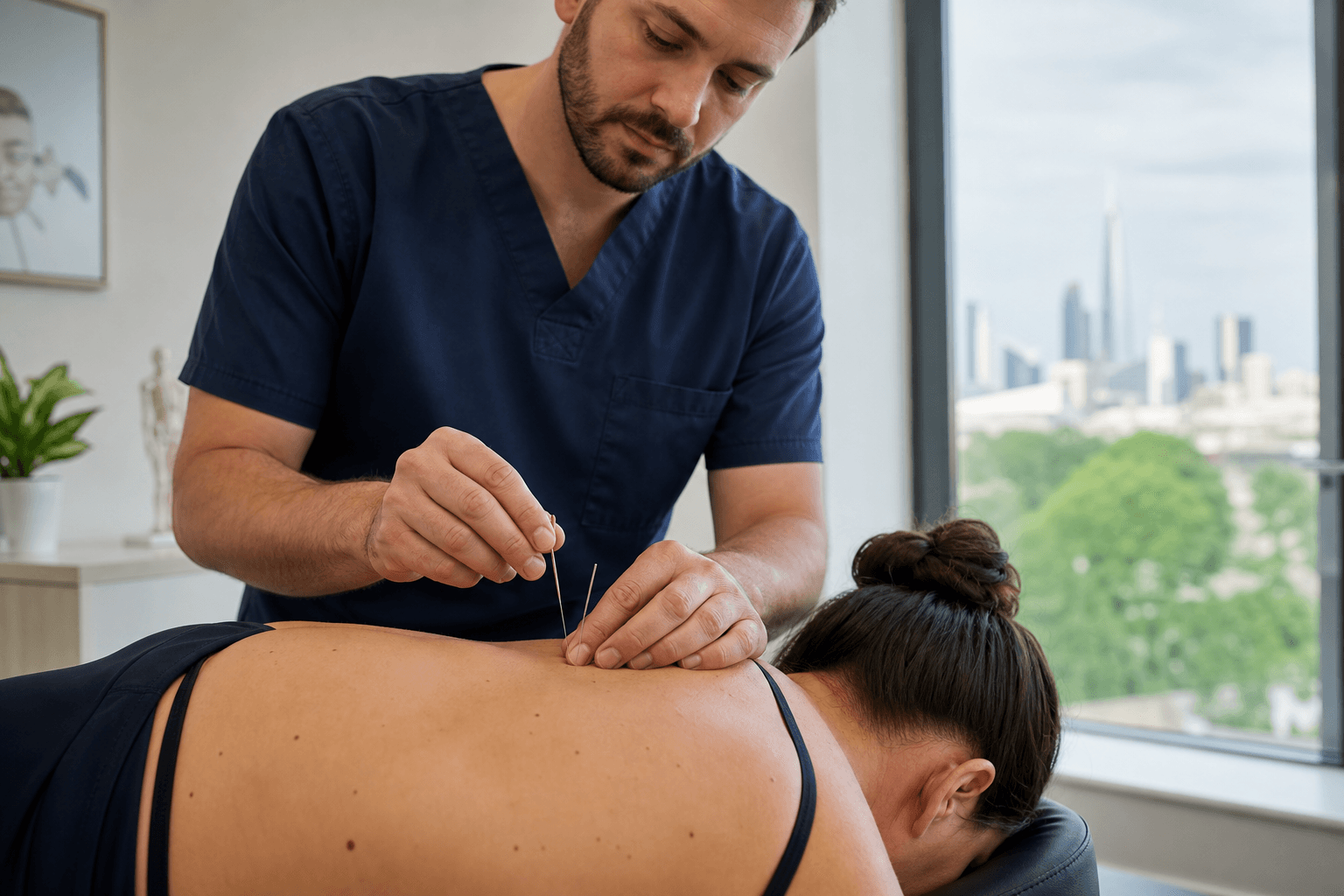
What dry needling benefits can North London patients expect?
Dry needling is a common adjunct in modern physiotherapy for people with persistent muscle pain and trigger points. This article lists seven practical, evidence-backed benefits to consider, explains how the treatment works and where it fits in a rehabilitation plan, and shows how Planet Health Care in Sherwood Forest Mall integrates dry needling with other therapies. Where the research or clinic policies address specific claims we cite the source so you can check the evidence yourself.
What dry needling is and how it differs from acupuncture
Dry needling, often called trigger point or intramuscular needling, uses thin filiform needles inserted directly into taut muscle bands or trigger points to provoke a local twitch response, reduce muscle tightness and improve movement. The proposed mechanism is that needle insertion can reduce muscle tone and increase local blood flow, which may ease pain and improve range of motion, as described by clinical sports medicine resources at Ohio State Wexner Medical Center (Dry needling | Ohio State Medical Center).
Dry needling is distinct from traditional acupuncture. The two practices use similar needles but differ in intent, diagnostic framework and typically the provider training. Dry needling is a biomedical, anatomically targeted intervention used by regulated musculoskeletal clinicians to address myofascial trigger points, while acupuncture follows Traditional Chinese Medicine principles. For an accessible comparison and a summary of available evidence see the University of Technology Sydney review (Dry needling is different to acupuncture. So what’s involved? And is it effective?).
Seven dry needling benefits North London patients should consider
Below are seven specific benefits supported by clinical studies or practice guidance, with short notes on limits and the best supporting evidence. These items reflect typical outcomes seen in short-term trials and clinical practice.
1) Short-term pain reduction for neck, shoulder and low back pain
Multiple systematic reviews report dry needling provides greater short-term pain relief than no treatment or sham needling for common musculoskeletal problems such as neck pain, shoulder pain and low back pain. That improvement is most consistent in the short term rather than as a guaranteed long-term cure, so dry needling is typically used as one element of a broader rehab plan. For summaries of the clinical reviews see Medical News Today (What is dry needling and what are its benefits and risks?) and the University of Technology Sydney overview (Dry needling is different to acupuncture. So what’s involved? And is it effective?).
2) Faster reduction of local muscle tightness and trigger-point sensitivity
Inserting a needle into a tight muscle band can produce a local twitch response that reduces muscle tone and sensitivity at the trigger point. This mechanical and reflex-mediated effect helps many patients feel less tightness after a session and allows more effective stretching and strengthening during the same appointment. The physiological rationale is discussed by the Ohio State Wexner team (Dry needling | Ohio State Medical Center).
3) Improved range of motion and function
By reducing focal muscle guarding and pain, dry needling often improves joint range of motion and functional tasks such as reaching, turning the neck, or walking without sharp pain. Improvements in motion are commonly reported within days rather than weeks, which helps patients begin or progress exercise programs sooner.
4) Works best when combined with exercise and active rehab
Trials tend to show better and more durable results when dry needling is paired with exercise, manual therapy or a structured rehabilitation plan, rather than used alone. The UTS evidence summary notes that while dry needling provides short-term relief, it is not consistently superior to other active treatments like exercise, so combining modalities is a practical approach in clinical practice (Dry needling is different to acupuncture. So what’s involved? And is it effective?).
5) May help stubborn tendon or overuse complaints as part of a multimodal plan
For tendon conditions that are slow to respond, such as lateral elbow pain or plantar fasciitis, clinicians sometimes include dry needling as one component alongside shockwave therapy, progressive loading and load modification. Evidence is mixed but some patients report faster symptom easing when needling is part of a coordinated plan that addresses tendon loading and biomechanics.
6) Can reduce short-term reliance on temporary pain medication
When dry needling lowers acute pain spikes enough to allow activity and exercise, some patients use fewer short-term analgesics. This is a pragmatic benefit rather than a guaranteed outcome, and it depends on individual response and the broader rehabilitation strategy.
7) Quick, clinic-friendly treatment that fits an assessment visit
Dry needling sessions are relatively brief and can often be added to a standard one-on-one physiotherapy assessment and treatment visit. That makes it a practical option for patients who want hands-on input plus immediate activation of an exercise program within the same appointment.
Evidence summary: what research shows and what it does not
Overall, systematic reviews conclude dry needling is superior to no intervention or sham for musculoskeletal pain, particularly for short-term pain reduction. However, many studies find it does not consistently outperform other active treatments such as exercise alone. Clinical practice guidelines vary and few recommend dry needling as a first-line treatment. These are important limitations to weigh when choosing care. For accessible summaries of the evidence see Medical News Today (What is dry needling and what are its benefits and risks?) and the University of Technology Sydney review (Dry needling is different to acupuncture. So what’s involved? And is it effective?).
Risks, contraindications and aftercare
Dry needling is generally safe when performed by trained clinicians who use single-use sterile needles. Expect minor and common side effects such as temporary soreness, local bruising or a brief increase in pain after needling. Less common but serious risks include infection and, for needles placed near the chest or upper back, the risk of pneumothorax. People with bleeding disorders, those on anticoagulant medication, those with local skin infections, or those who are pregnant should discuss suitability with the clinician prior to treatment.
Aftercare recommendations typically include short periods of rest from demanding loading, gentle movement and progressive exercise as advised by your physiotherapist, and ice for brief discomfort if needed. Seek urgent care if you develop widening chest pain, increasing shortness of breath, a spreading infection at the needling site, or other concerning symptoms. For procedure safety and basic mechanisms see Ohio State Wexner Medical Center (Dry needling | Ohio State Medical Center) and Medical News Today (What is dry needling and what are its benefits and risks?).
Who is most likely to benefit: decision criteria for patients
Dry needling is most useful when a clinician identifies clear myofascial trigger points that reproduce your symptoms, especially for acute or subacute neck, shoulder and back pain that limits motion. Candidates include people who have not fully improved with basic self-management and who are willing to follow an active rehab plan that includes exercise. Suitability should be tested in a clinical assessment where the physiotherapist reviews medical history, medication and expectations. Evidence suggests combining needling with an exercise program typically produces the best outcomes (Dry needling is different to acupuncture. So what’s involved? And is it effective?).
What to expect during and after a dry needling session
An evidence-based clinic starts with an assessment to confirm trigger points and identify contributing factors. The clinician explains expected benefits and risks and obtains informed consent. Needles are inserted into targeted muscle bands for a few seconds to several minutes depending on technique. You may feel a sharp sensation or local twitch, followed by a deep ache or mild soreness that settles within 24 to 72 hours for most patients. Noticeable improvement in pain or motion is often reported within days. Follow-up usually includes exercise, manual therapy or other modalities tailored to your goals.
How Planet Health Care integrates dry needling into multidisciplinary care in North London
At Planet Health Care dry needling is offered within one-on-one physiotherapy assessments and used as part of coordinated care when clinically appropriate. The clinic combines needling with complementary options such as registered massage therapy, shockwave therapy, exercise prescription and professional fitting for orthotics and bracing when indicated, so treatments align rather than conflict. Planet Health Care describes an assessment-first approach and team collaboration that shares notes across disciplines to create a single treatment plan.
Practical local features that matter to patients include the Sherwood Forest Mall location, free parking at the mall entrance, online booking and same-day appointments when available, and direct billing to many extended health insurers, as listed on the clinic website. For more about the clinic and its physiotherapy services see Planet Health Care and the physiotherapy service page.
Questions to ask before you try dry needling
- What are your qualifications and specific dry needling training?
- How does needling fit my overall rehabilitation plan and expected timeline?
- Are there any medical reasons I should not have dry needling given my history or medications?
- What infection control procedures do you use and what single-use supplies are applied?
- Will you document measurable goals and how long should we trial needling before deciding it is not helping?
- Do you offer direct billing to my insurer and what out-of-pocket costs should I expect?
Frequently asked questions
How long does it take to feel dry needling benefits and how long do they last?
Many patients notice reduced tightness or less pain within days, and improvements in range of motion often follow quickly. Benefits are most consistently reported in the short term. Durability varies by condition, by whether needling is combined with exercise, and by individual factors related to tissue healing and load management. If sustained improvement is the goal, expect a program of progressive rehabilitation alongside any needling sessions.
Is dry needling safe and what are the common side effects to expect?
When provided by trained clinicians who follow sterile technique, dry needling is generally safe. Common side effects include temporary soreness and local bruising. Rare but serious complications are possible, so clinicians screen for contraindications and use careful technique.
How is dry needling different from acupuncture and can I get both?
Dry needling targets myofascial trigger points within a biomedical framework. Acupuncture is rooted in Traditional Chinese Medicine and follows different diagnostic concepts. A clinic may offer both services but providers typically explain the goals of each and only recommend them when appropriate for your condition.
Will my extended health insurance cover dry needling in London, Ontario?
Coverage varies by insurer and plan. Planet Health Care notes it can direct-bill many major extended health insurers for eligible services, but it is best to confirm coverage and any referral requirements with your insurer and the clinic before booking.
If dry needling does not help, what are reasonable next steps?
If you do not see improvement after a short trial agreed with your clinician, reasonable options include stopping needling, intensifying or modifying the active exercise program, adding or changing manual therapy or shockwave therapy, or considering referral for a specialist opinion. The key is measurable goals and a pre-agreed review point.
Ready to discuss whether dry needling could help your specific problem? Visit Planet Health Care to book an assessment or learn more.