
How do you choose custom orthopedic bracing in London, Ontario?
A step-by-step decision guide for when custom orthopedic bracing is appropriate, what to ask suppliers, what to expect at a fitting, and local next steps.
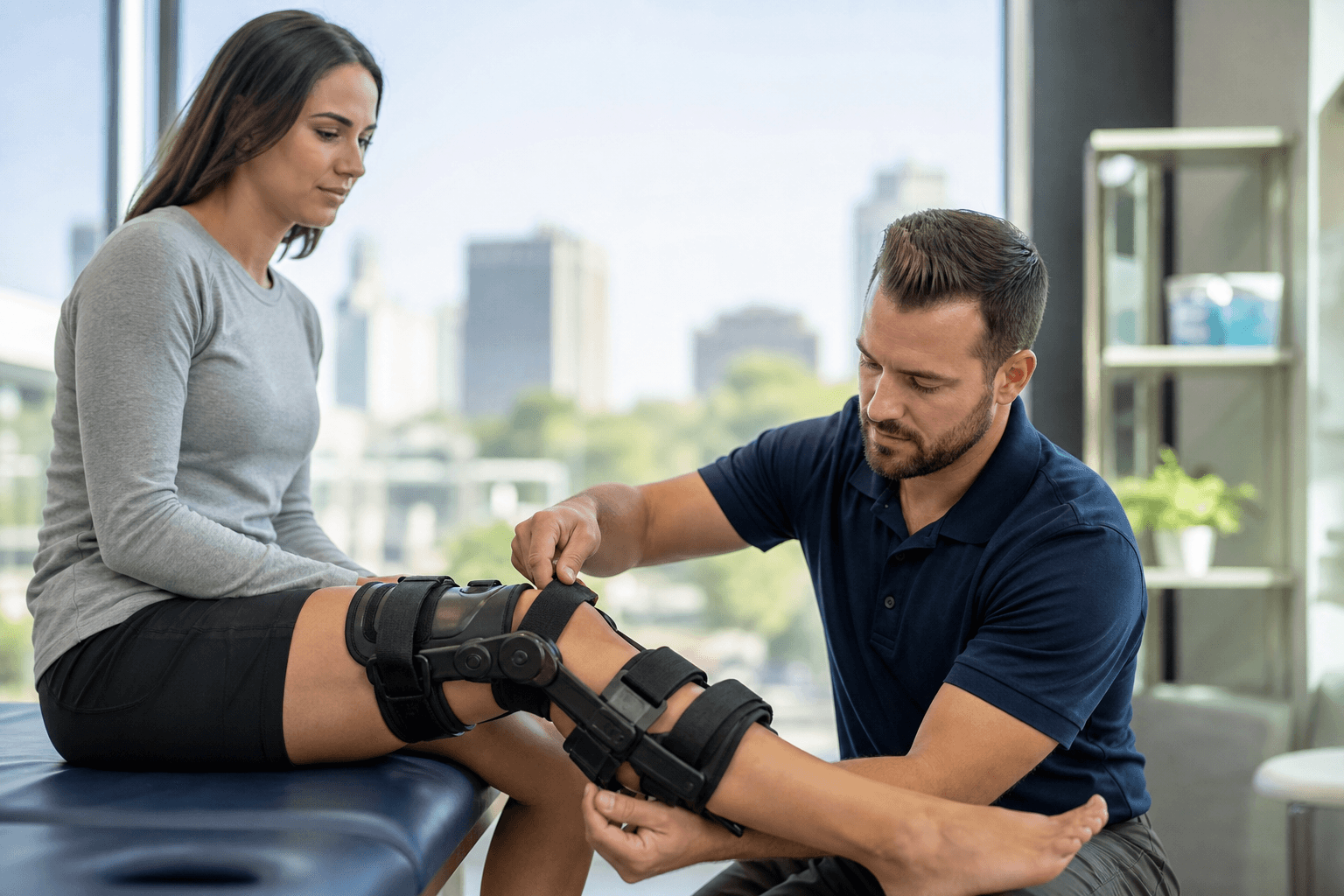
How do you choose custom orthopedic bracing in London, Ontario?
Deciding whether to order custom orthopedic bracing involves clinical judgment, insurer logistics, supplier verification, and a clear plan for fitting and follow-up. This step-by-step guide helps patients and referrers in London, Ontario determine when custom bracing is likely needed, which questions to ask prospective suppliers, what happens at an assessment and fitting, and how to book local services such as on-site fittings and direct billing.
Step 1: Decide whether custom bracing is clinically indicated
Conditions when custom bracing is likely recommended
Custom devices are most useful when an off-the-shelf brace cannot provide the needed fit, alignment or durability. Typical scenarios include post-surgical knees with complex stabilizing needs, chronically unstable joints that risk re-injury, severe foot or ankle deformity, and neurological conditions such as foot drop where precise molding or hinge placement matters. Local clinician resources explain when custom support is worth the extra cost and fitting time, and why a qualified clinician should assess your case before ordering a custom brace (advice for custom knee braces in Canada, guidance on custom versus over-the-counter bracing).
Quick screening questions for patients and referrers
- Has a surgeon or physiotherapist advised custom support because of instability or surgical repair?
- Do you have a significant limb deformity or previous braces that never fit well?
- Is your condition refractory to a properly fitted off-the-shelf brace after trial and rehabilitation?
- Does your daily activity or work demand a brace with durability and adjustability beyond prefabricated options?
If you answered yes to one or more items, book a specialist assessment to explore custom options. If all answers are no, a clinician-supervised trial of a high-quality prefabricated brace is often a reasonable first step.
Step 2: Gather prescriptions, insurer details and documentation
Referral and prescription notes to check
Some insurers or suppliers require a prescription from a physician, surgeon or authorized clinician before custom fabrication. Bring current imaging, operative reports, and any written device prescription or functional goals. Clinics that coordinate multidisciplinary care can often help collect paperwork and submit claims: for example, Planet Health Care lists on-site measurement and fitting and direct billing to many extended health insurers as part of its services (Planet Health Care — service overview).
Before you sign an order, ask your insurer whether a custom brace is eligible for reimbursement and what documentation they need. If coverage is uncertain, request a written pre-authorization or a benefits estimate so you understand potential out-of-pocket costs.
Step 3: Vet suppliers and ask these non-negotiable questions
Not all suppliers offer the same level of clinical oversight, fabrication standards, or legal compliance. Use a short checklist when vetting a supplier and treat incomplete answers as a warning sign.
- Licensing and regulatory status: Ask whether the supplier and any manufacturer hold the necessary licences and whether they are listed with Health Canada or relevant registries. Professional guidance recommends using Health Canada resources such as MDEL listings to verify supplier licensing before entering agreements (what to look for in an orthopedic bracing supplier).
- Fabrication method: Is the brace hand-molded, vacuum-formed from a cast, or produced from a 3D scan? Each method affects fit, turnaround and potential need for adjustments.
- Clinical oversight and collaboration: Who will sign the prescription, perform the clinical assessment, and sign off on the final device? Confirm how the supplier will communicate with your physiotherapist or surgeon.
- Lead time and delivery: Ask for a written estimate of fabrication and shipping timelines and a plan for urgent needs or interim supports.
- Warranty, repairs and returns: Get details on warranty coverage, repair turnaround, and the supplier’s remake policy if the brace cannot be adjusted to fit.
- Follow-up care: Will they provide in-person follow-up adjustments and who pays for those visits?
Request these answers in writing. A reputable supplier will explain their process and provide references or examples of similar cases.
How to check licensing, MDEL listings and legal compliance in Ontario
Physicians First recommends checking Health Canada listings, such as Medical Device Establishment Licence references, to confirm a supplier’s regulatory status and to reduce procurement risks. Ask the supplier for their licence number and cross-check it using the guidance given by clinical procurement resources (supplier verification guidance).
Step 4: What happens at the assessment and fitting — an ordered walkthrough
The fitting process is typically a multi-step workflow that ensures function and comfort. Expect a clinic to follow these stages in sequence.
- Initial clinical assessment: A clinician documents your diagnosis, functional goals, and contraindications. They confirm whether custom bracing is the most appropriate intervention.
- Measurements or scanning: The fitter takes precise measurements or performs a 3D scan. Accurate data reduces the need for remakes and improves comfort.
- Fabrication: The device is built per the prescription and chosen fabrication method. You should receive a clear estimate of the expected lead time.
- Trial fitting: When the brace arrives, the fitter checks alignment, pressure points and range-of-motion limits and makes immediate adjustments where possible.
- Delivery and instruction: You receive wearing instructions, cleaning guidance and activity restrictions tailored to your condition.
- Scheduled follow-up: A follow-up visit within a few weeks confirms fit and function and schedules repairs or adjustments if required.
What to bring and how to prepare for your fitting appointment
- Relevant imaging or surgical reports and any device prescriptions.
- Comfortable clothing and the footwear you normally use for the activity you need to support.
- Your current brace or orthotic, if you have one, so the fitter can compare fit and function.
- A list of daily activities and symptom triggers to guide functional objectives.
Planet Health Care highlights an assessment-first approach and on-site fitting services that let clinicians explain the plan in plain language and coordinate follow-up visits with physiotherapy or other disciplines (Planet Health Care — clinic services).
Step 5: Compare tradeoffs — cost, lead time, adjustability, durability and necessity
Compare these tradeoffs before you commit to custom fabrication.
- Cost versus function: Custom devices typically cost more but can deliver precise alignment and durability for high-demand or complex cases. Discuss whether the incremental benefit justifies the expense for your condition (expert guidance on when custom is worth paying for).
- Lead time: Custom fabrication takes longer than buying off-the-shelf supports. If you need immediate protection, ask about temporary prefabricated braces while the custom device is made.
- Adjustability: Some custom braces are designed for on-the-spot adjustments, while others require workshop repairs. Make sure the follow-up plan covers expected changes during rehabilitation.
- Durability and repairability: A higher upfront cost can be offset by a longer useful life and straightforward repairs for active users.
- Rehab influence: In some cases, supervised rehabilitation reduces the need for a custom device or changes the prescription; discuss the planned rehab timeline with your clinician (clinical tradeoffs between custom and OTC bracing).
Decision criteria checklist to stop or proceed
- Clinical need not met by a well-fitted prefabricated brace.
- Supplier meets licensing and warranty requirements and shares a clear lead-time estimate.
- Insurer pre-authorization or a confirmed payment plan is in place if needed.
- Rehabilitation plan is coordinated with the clinician who prescribed the brace.
If all items are satisfied, proceeding with custom fabrication is reasonable. If one or more items are unresolved, pause and resolve the gaps before signing an order.
Step 6: After delivery — break-in, rehab integration and scheduled adjustments
Expect a short break-in period where minor discomfort is addressed with strap adjustments and padding. Your physiotherapist should integrate the brace into your exercise plan, progressively exposing the limb to functional loads while monitoring for pressure areas and changes in gait or movement. Request a clear schedule for follow-up checks and repairs, and ask who to contact if the brace becomes painful or fails.
Local next steps: where to get fitted in London, Ontario and how Planet Health Care can help
What to expect from an on-site fitting at Planet Health Care
Planet Health Care offers in-clinic measurement and fitting for custom orthopedic bracing alongside physiotherapy, chiropractic and orthotics services. The clinic emphasizes a shared-notes model so practitioners coordinate the plan, and they provide practical conveniences such as online booking, same-day appointments when available, direct billing to many extended health insurers, and free parking at Sherwood Forest Mall (Planet Health Care — clinic services).
To proceed locally: gather your imaging and any prescription, contact the clinic to request a custom-brace assessment, and ask the clinic to confirm the supplier’s licensing and expected lead time. If you prefer, request a temporary prefabricated brace while the custom device is made.
Final decision points and safety limits
Do not attempt to self-fit a custom brace or delay clinical review if you have rapid swelling, changing neurovascular signs, severe uncontrolled pain, or signs of infection. If the brace causes numbness, increasing pain, open skin or colour changes, remove it and seek immediate clinician input. If your functional goals are urgent, request an interim prefabricated solution and a documented expedited plan from your fitter.
Frequently asked questions
Do I need a prescription to get a custom orthopedic brace in Ontario?
Requirements vary. Some insurers and suppliers require a clinician prescription or surgeon note; others will assess you in-clinic and obtain a prescription as part of the process. Ask your chosen fitter and your insurer before booking. Clinics that coordinate care can help gather the required documentation (Planet Health Care — services).
Will my insurer cover a custom brace and can the clinic direct-bill for fitting and fabrication?
Coverage depends on your plan. Ask your insurer for pre-authorization and a written explanation of benefits. Many clinics offer direct billing for assessment and fitting; verify whether fabrication and device costs are eligible for direct billing or require patient reimbursement first.
How long does it usually take to get a custom brace made and fitted in Canada?
Lead times vary by supplier, fabrication method and current workload. Ask the supplier for a written lead-time estimate and whether an interim brace is available. Expert consumer guidance recommends confirming timelines before ordering (custom brace considerations).
When should I choose a custom brace over an over-the-counter option?
Choose custom bracing when prefabricated devices fail to control instability, when limb shape or deformity prevents a comfortable fit, or when surgical repairs require precise mechanical support. A qualified clinician should confirm the indication after supervised trials and rehabilitation (clinical guidance).
What should I bring to my first custom-brace assessment appointment?
Bring recent imaging and surgical reports, a written prescription if available, comfortable clothing and usual footwear, and any current brace or orthotic you use. Also bring insurer contact details so the clinic can help confirm coverage and billing options.
Ready to book a local assessment or ask about on-site custom orthopedic bracing in London, Ontario? Visit Planet Health Care to schedule an appointment and learn how the clinic coordinates measurement, fitting and follow-up: Planet Health Care.