
Cupping therapy benefits vs massage and shockwave: evidence review
Evidence-based comparison of cupping therapy benefits, safety, and how it compares or combines with massage, shockwave and physiotherapy in North London.
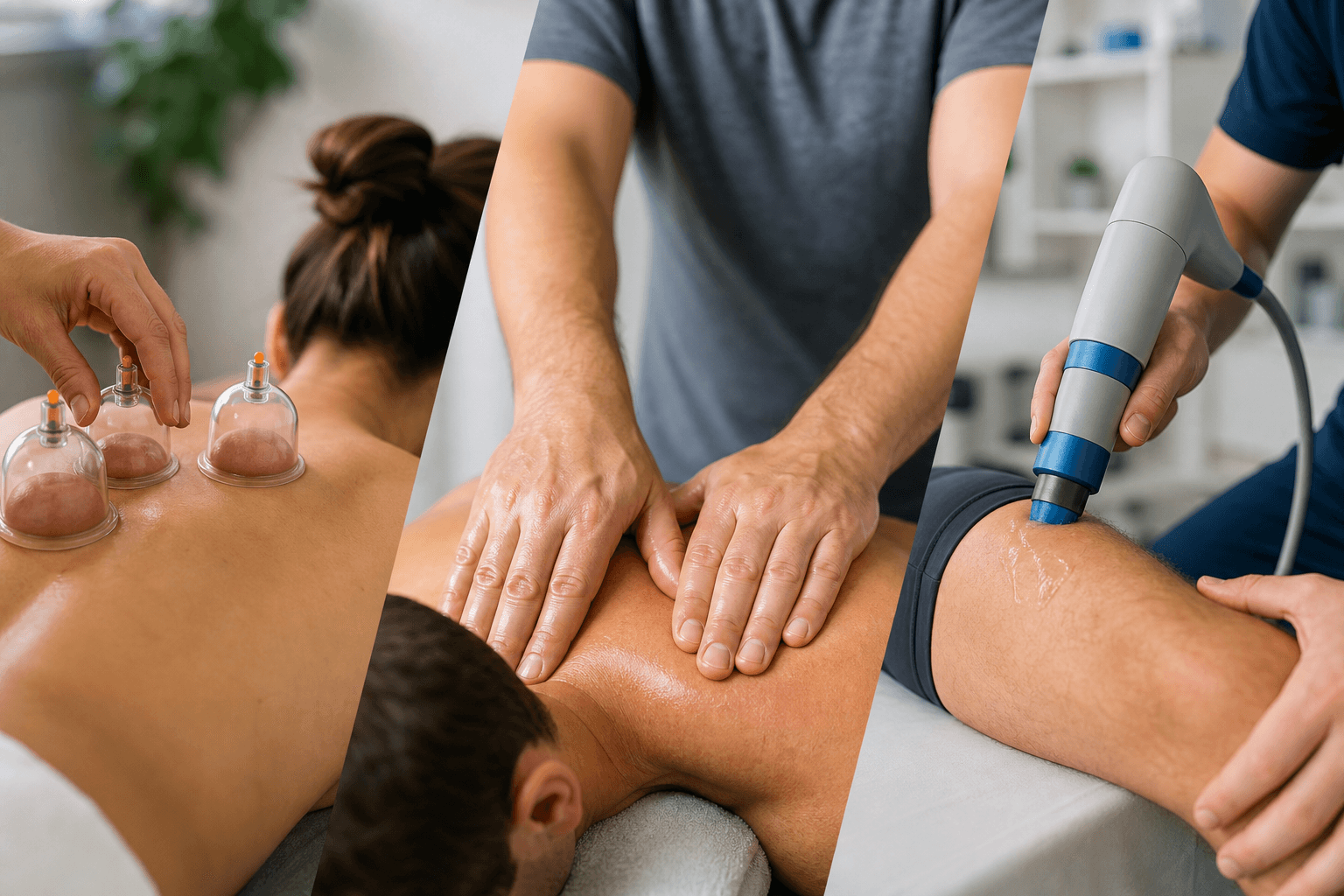
Cupping therapy benefits vs massage and shockwave: evidence review
Quick answer: when cupping helps and when it does not
Cupping therapy can provide short-term pain relief and improved function for some musculoskeletal conditions, particularly low back pain, neck pain and knee osteoarthritis, but the overall quality of evidence varies and effect sizes are often modest. Systematic reviews and evidence maps report positive signals for a range of pain conditions while also noting methodological limitations, so clinicians regard cupping as a complementary option rather than a substitute for conventional care Evidence map of cupping therapy, Medical News Today review, StatPearls cupping summary, Harvard Health overview.
What cupping is and how it may work
Cupping uses local suction on the skin to draw blood into the area and stretch underlying tissues. Practitioners use glass, plastic or silicone cups and create suction either by briefly heating air inside a cup then applying it or by mechanical pumps. Proposed mechanisms that could explain clinical effects include increased local blood flow, short-term changes in tissue mechanics, modulation of inflammation, and raised pain thresholds. The precise biological pathways remain incompletely defined and likely vary with the condition treated Healthline summary, Harvard Health, StatPearls.
Types: dry cupping and wet cupping
Dry cupping places suction cups over intact skin. Wet cupping adds a superficial skin incision to withdraw a small amount of blood after suction. Both techniques have been studied. Wet cupping may produce larger local effects but carries higher risk of bleeding and infection and requires strict hygiene and trained clinicians. Clinical reviews describe benefits for pain management with both techniques but emphasise different risk profiles and the need for careful patient selection StatPearls, Healthline.
Conditions with the strongest evidence for benefits
Systematic reviews and evidence maps identify several conditions where cupping shows the most consistent positive signals. The quality of evidence ranges from low to moderate, and many studies are small or use varied protocols. Key conditions with supportive findings include low back pain, neck pain, knee osteoarthritis, some migraine contexts and painful viral conditions such as herpes zoster evidence map, synthesis review. These reviews note faster, short-term pain relief and modest improvements in disability in many trials, but they also call for larger, better-designed randomized studies.
Evidence summary by condition
- Low back pain: Several reviews report short-term pain reduction and improved function compared with no treatment or sham; certainty is limited by study heterogeneity PMC evidence map.
- Knee osteoarthritis: Meta-analyses report symptomatic improvement for pain and function in some trials, though longer-term benefit is uncertain Medical News Today.
- Neck pain: Trials suggest short-term reduction in pain intensity and improved range of motion compared with minimal care; again, quality varies evidence map.
- Migraine and certain neuropathic pain: Limited data show potential benefit for frequency and intensity in selected studies, but evidence is inconsistent synthesis review.
- Dermatological or viral pain conditions: Wet cupping has historical and trial support for herpes zoster pain in some reviews, but procedural risks require careful technique evidence map.
Cupping compared with massage, shockwave, physiotherapy and acupuncture
How cupping compares with other local treatments depends on mechanism, target tissue and condition. Below are practical contrasts and when each option is most useful. For local integrated care, combined approaches are common at multidisciplinary clinics such as Planet Health Care Planet Health Care.
Cupping versus massage
Technique and effect: massage uses hands or tools to apply pressure and movement to soft tissue, aiming to reduce muscle tension, improve circulation and retrain movement patterns. Cupping applies sustained suction that focally increases blood flow and stretches tissue. Both can reduce pain and improve perceived recovery, but massage is usually better for broad soft-tissue mobilization, neuromuscular re-education and immediate relaxation. Cupping may be preferred when focal tissue adhesion, localized circulatory change or a strong sensory reset is the goal. Some patients benefit from both in the same plan Healthline, Medical News Today.
Cupping versus shockwave therapy
Shockwave therapy delivers acoustic pulses to stimulate tissue repair and reduce chronic tendon pain such as plantar fasciitis or lateral epicondylitis. High-quality trials support shockwave for selected tendinopathies, offering structural and symptomatic change over weeks. Cupping’s mechanism is more circulatory and sensory modulation and tends to give faster, short-term symptom relief. For stubborn tendon problems, shockwave often has stronger condition-specific evidence; cupping might be adjunctive to reduce pain or improve function while shockwave targets tissue healing Medical News Today, evidence map. Planet Health Care offers both modalities and can combine them in a coordinated plan shockwave therapy at Planet Health Care.
When to combine cupping with other treatments
Combining cupping with physiotherapy, massage, acupuncture or shockwave can be effective when each modality addresses different aspects of a problem. For example, a plan for chronic low back pain might include physiotherapy for motor control and exercise, cupping for short-term pain relief and increased tissue mobility, and massage for soft-tissue release. Reviews support multimodal care and highlight the value of an assessment-first approach that tailors modality choice to diagnosis and patient priorities evidence map, StatPearls. Planet Health Care provides coordinated care under one roof so practitioners can share notes and align treatments Planet Health Care services.
Safety, side effects and contraindications
Common side effects include temporary circular skin marks, mild bruising, soreness and brief lightheadedness. Wet cupping adds small risks of bleeding and infection if performed without sterile technique. Major contraindications include active skin infection at the treatment site, bleeding disorders, anticoagulant use without clinician approval, severe frailty and certain dermatological conditions. Major medical sources stress cautious use and recommend trained clinicians and hygienic practice to reduce risk Harvard Health, StatPearls, Healthline.
What to expect at a clinic session and typical outcomes
Before treatment you should receive an assessment that identifies the target tissue, medical history and any contraindications. A typical session for dry cupping lasts 10 to 20 minutes of suction application, sometimes combined with movement or manual therapy. Wet cupping follows local cleansing and sterile technique. Expect circular marks that fade over days to two weeks, and immediate symptom change for some patients. Meaningful improvement often appears within a few sessions for short-term pain relief, while longer-term functional gains are more likely when cupping is combined with active rehabilitation and exercise programs Healthline, Medical News Today. Clinics that integrate cupping with physiotherapy, massage and shockwave can tailor aftercare and progressions Planet Health Care.
Decision checklist: is cupping right for you
- If you have focal musculoskeletal pain such as low back or neck pain and want short-term relief alongside an exercise plan, consider cupping as an adjunct.
- If you have a tendon condition resistant to conservative care, prioritise evidence-backed options such as shockwave or structured physiotherapy and use cupping adjunctively for symptomatic relief.
- Avoid wet cupping if you are on anticoagulants, have a bleeding disorder or have an active skin infection; discuss risks with a clinician first StatPearls.
- Choose a clinic that performs an assessment-first approach and offers coordinated care so you can combine cupping with exercise, manual therapy or shockwave if needed Planet Health Care.
Common objections and clinician responses
- “Cupping leaves scars” — Marks are usually temporary bruises; true scarring is uncommon when performed correctly. Avoid cupping over fragile or scarred skin.
- “It is unproven” — Evidence shows modest, short-term benefits for several pain conditions, but quality varies; treat cupping as complementary, not a guaranteed cure Medical News Today, evidence map.
- “My insurance may not cover it” — Coverage for cupping varies by insurer. Planet Health Care offers direct billing for many eligible services, but confirm coverage before booking Planet Health Care.
How to get cupping in North London at Planet Health Care
Planet Health Care in Sherwood Forest Mall offers cupping as part of its multidisciplinary services, with coordinated care across physiotherapy, chiropractic, registered massage therapy, shockwave therapy and acupuncture. The clinic emphasises assessment-first care, online booking, same-day appointments when available, direct billing to many extended health insurers and free parking at the mall entrance Planet Health Care. If you decide to try cupping, book an assessment so clinicians can confirm suitability and integrate cupping with an active rehabilitation plan see services.
Frequently asked questions
Does cupping therapy help with back pain and how strong is the evidence
Yes, trials show cupping can reduce back pain intensity and improve short-term function compared with no treatment or sham in several studies, but evidence quality is mixed and longer-term benefits are less certain. Systematic reviews recommend cautious, adjunctive use alongside active rehabilitation evidence map, synthesis review.
What is the difference between dry cupping and wet cupping and which is safer
Dry cupping uses suction only and carries lower procedural risk. Wet cupping includes small skin incisions to draw blood and has higher risk of bleeding or infection; it requires strict sterile technique and clinician training. Dry cupping is generally safer for first-time users StatPearls.
How many cupping sessions are typical and how long until I see improvement
Many patients notice some symptom change after one session, with more consistent short-term benefit after two to six sessions depending on the condition. For lasting functional gains, combine cupping with exercise and follow-up care over weeks to months as guided by a clinician Medical News Today.
What are the common side effects and who should avoid cupping
Common side effects are circular marks, bruising and transient soreness. Avoid cupping with active skin infection, uncontrolled bleeding disorders, or on anticoagulant therapy without medical approval. Wet cupping specifically increases bleeding and infection risk and should be avoided in higher-risk patients Harvard Health, StatPearls.
Will my extended health insurance cover cupping therapy
Coverage varies by insurer and by the practitioner’s billing policies. Planet Health Care offers direct billing for many eligible services, but confirm your individual plan and whether cupping sessions are covered before booking Planet Health Care.
Planet Health Care is available for online booking and coordinated assessments to determine whether cupping, shockwave or another modality is the best option for your condition.